


21 May 2025

5 min read
Zephyr OS Security: Architecture, Features, and the Future of IoT Security
-
21 May 2025
5 min read
Zephyr OS Security: Architecture, Features, and the Future of IoT Security
-

Zephyr OS is a leading open-source real-time operating system (RTOS) designed for resource-constrained devices, with security as a core design principle. As IoT adoption accelerates, the security of edge devices running Zephyr OS is paramount. This blog explores Zephyr OS’s security architecture, its detailed components, the current IoT security landscape, real-world applications, and what the future holds.
1. Zephyr OS Security Architecture
Zephyr OS employs a monolithic security architecture. The kernel and all applications are compiled into a single static binary, eliminating the need for dynamic loaders and reducing the attack surface. System calls are implemented as direct function calls, not requiring context switches, which further minimizes vulnerabilities.
Key architectural principles include:
- Secure by Design: Security is embedded throughout the development process, from architecture to code review and certification.
- Open Design: Relies on publicly vetted cryptographic algorithms and libraries, not on secrecy.
- Economy of Mechanism: Keeps the system as simple and modular as possible.
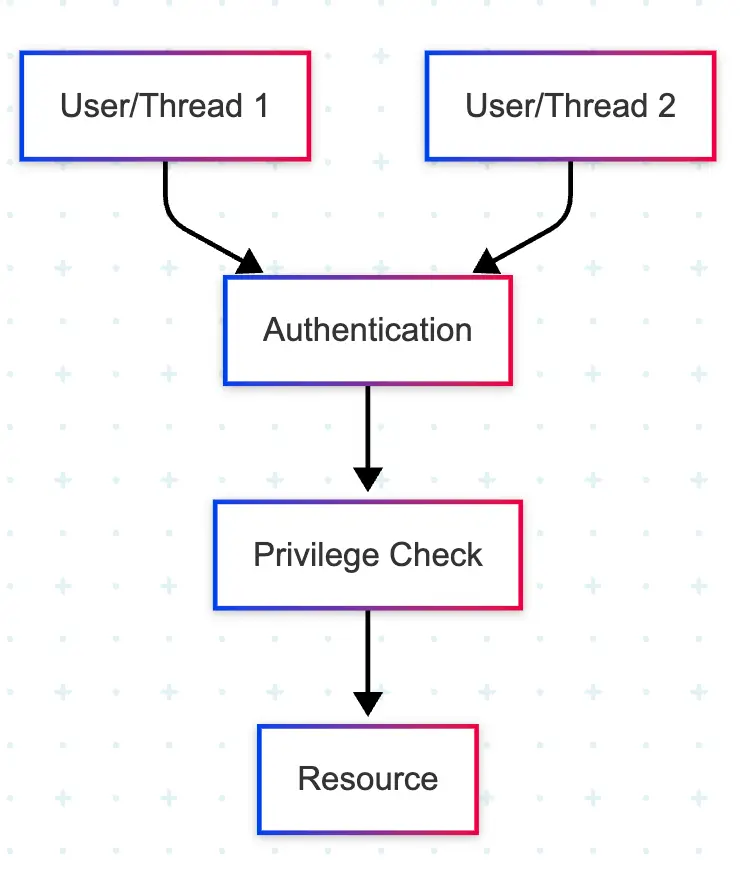
- Complete Mediation: Every access to objects and processes is authenticated.
- Fail-safe Defaults: Access is denied by default and only allowed under specific, authenticated conditions.
- Separation of Privilege & Least Privilege: Multiple conditions are required for access, and permissions are minimized per process/thread.
2. Breakup of the Security Architecture
2.1 Cryptographic Functionality
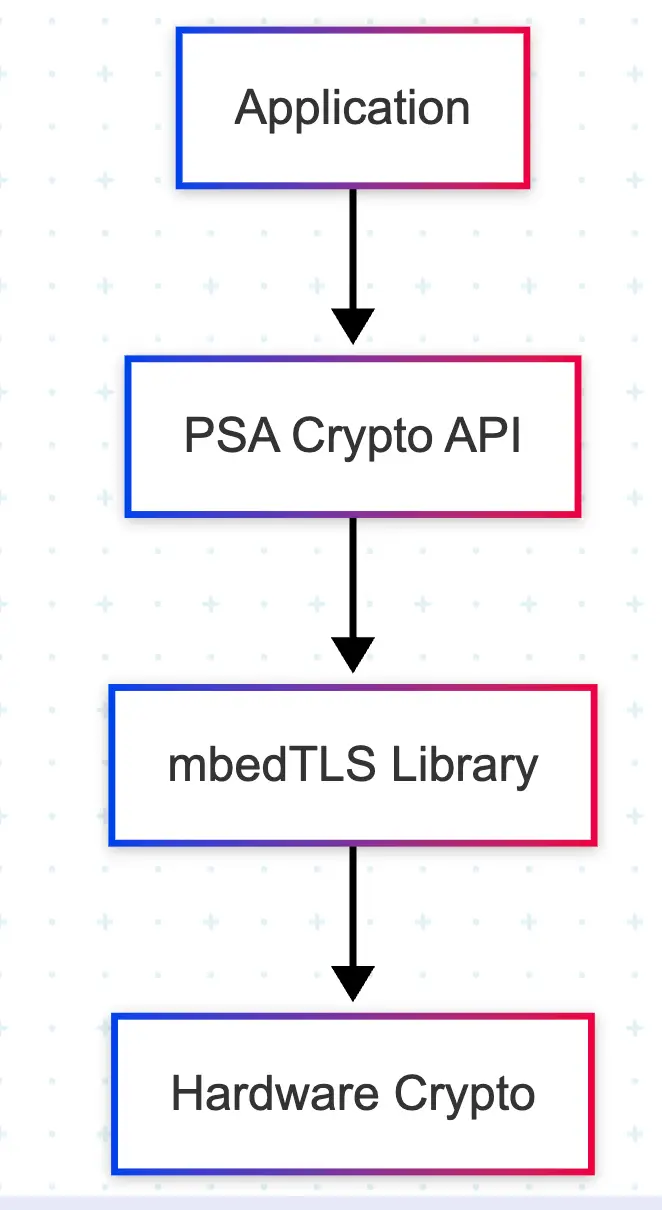
Zephyr’s cryptographic services are provided via the PSA Crypto API, implemented with mbedTLS. This supports a wide range of cryptographic algorithms, ensuring secure data handling for diverse applications. Future releases aim to support hardware cryptographic modules, secure key storage (SAMs, TPMs), and Trusted Execution Environments (TEEs).
2.2 Execution and Memory Protection
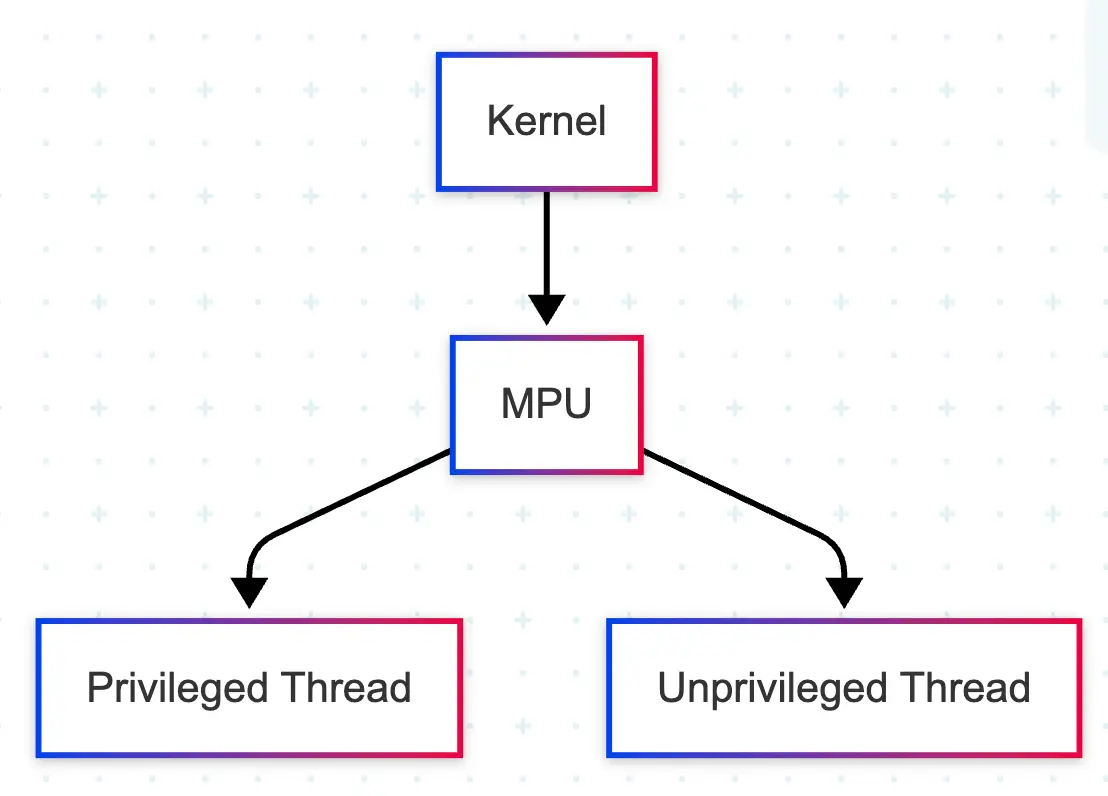
Zephyr enforces execution protection with stack canaries to prevent stack overruns. It also supports thread separation, allowing privileged and unprivileged execution environments. If the hardware supports it, Zephyr can partition memory and assign resources to threads, enforcing these constraints during context switches.
2.3 Secure Development Lifecycle
Security is integral to Zephyr’s development process:
- Code Reviews: All code is reviewed before integration.
- Static Code Analysis: Automated tools check for vulnerabilities.
- Quality Assurance: Reuse of proven components (e.g., network stacks) and stable APIs.
- Security Certification: Defined targets and assets, with evidence-backed certification claims

2.4 Access Control and Privilege Separation
Zephyr enforces strict access control using:
- Least Privilege: Each process/thread gets only the permissions it needs.
- Separation of Privilege: Multiple conditions must be met for access (e.g., split keys).
- Fail-safe Defaults: Services are disabled by default, enabled only after authentication.
3. Platform Security Architecture (PSA) Certification
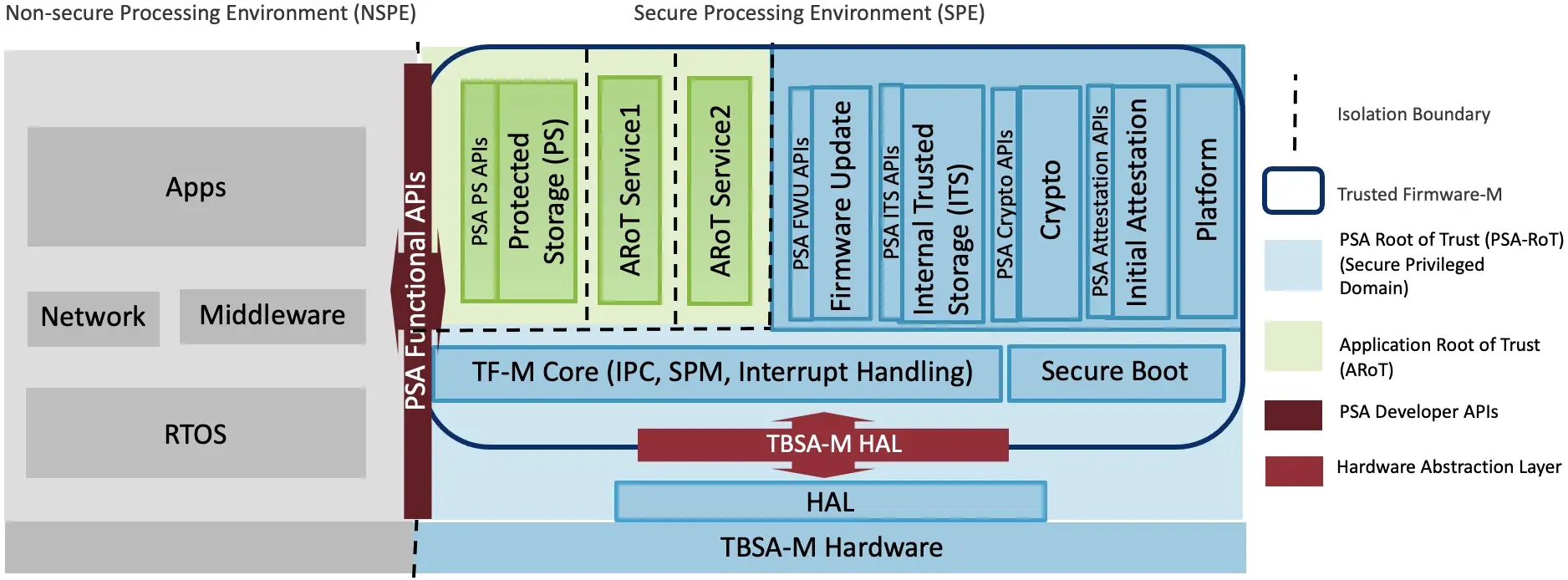
The Zephyr RTOS project has obtained PSA Certified status, demonstrating that it meets the security standards outlined in the PSA Certified framework. This certification is made possible by incorporating Trusted Firmware-M (TF-M), a reference implementation of the PSA architecture that manages security-sensitive operations on the device's secure side, while Zephyr operates on the non-secure side. Zephyr has received certifications at multiple PSA levels, including Level 1 and the PSA Functional API certification, confirming that it satisfies defined security criteria set by the PSA framework.
4. Secure Boot
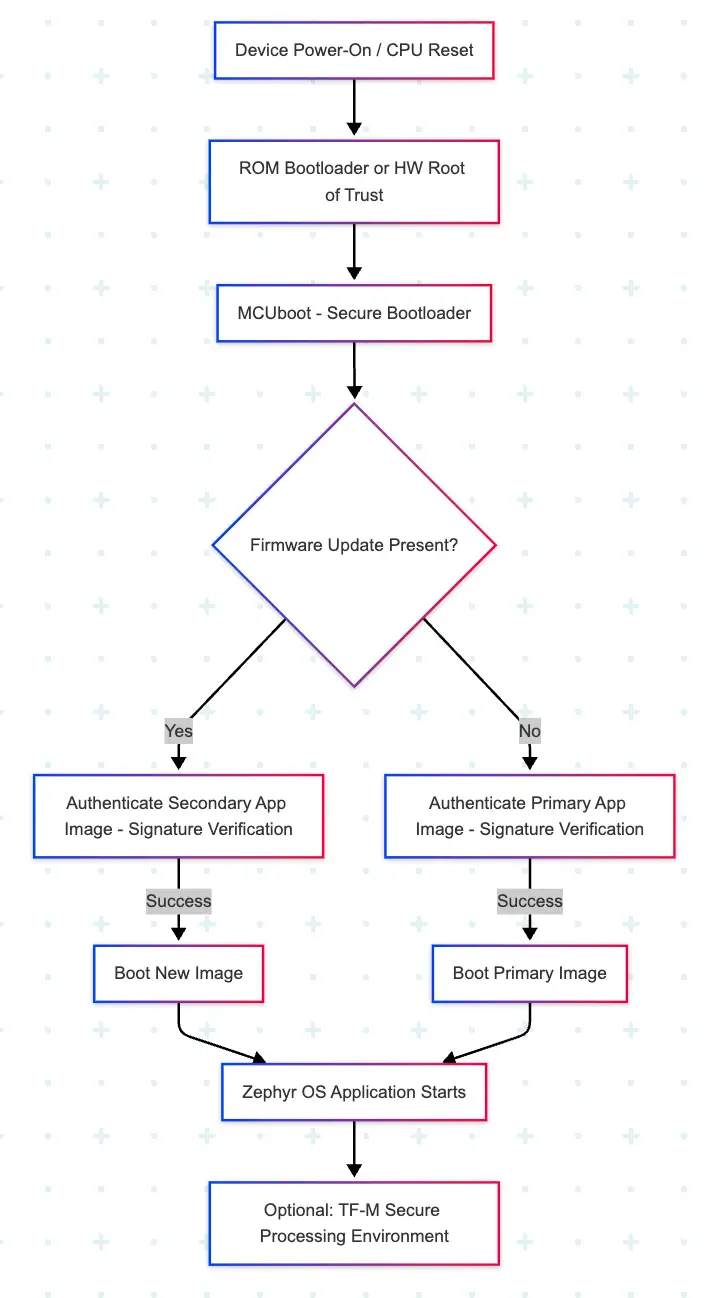
Zephyr OS leverages MCUboot as its primary secure bootloader for 32-bit microcontrollers. MCUboot is an open-source, hardware-agnostic bootloader that provides a common infrastructure for secure firmware validation and update processes.
- Image Signing: Firmware images are cryptographically signed (typically using ECDSA-P256 or RSA algorithms).
- Signature Verification: At boot, MCUboot verifies the digital signature of the firmware image using a public key.
- Public Key Storage: The hash of the public key is embedded or compiled with the MCUboot binary. For higher security, this hash can also be stored and retrieved using hardware keys if available.
- Chain of Trust: The boot process establishes a root of trust, starting from immutable ROM code or a hardware-based bootloader, then to MCUboot, and finally to the application image.
5. Current State of IoT Security
IoT security is at a crossroads. While IoT devices offer unprecedented convenience and automation, they also expand the attack surface for cyber threats. Key trends and risks include
- Proliferation of Devices: More devices mean more potential vulnerabilities.
- Remote Attacks: Ransomware, unauthorized access, and malware are on the rise.
- Data Privacy Concerns: Sensitive data is often transmitted without adequate encryption.
- Authentication Weaknesses: Many devices still use default or weak credentials.
- Patch Management: Devices often lack secure, automated update mechanisms.
- Regulatory Pressure: Compliance requirements are increasing globally.
6. Real-World Products Using Zephyr OS Security
Zephyr OS is trusted in a variety of real-world products where security is paramount, including:
- Industrial IoT Gateways
- Medical Devices
- Smart Home Controllers
- Wearables
- Automotive Systems
Case studies and technical sessions from the Zephyr Project highlight deployments in sectors where robust security is a necessity, not a luxury
7. Future of IoT Security
The future of IoT security will be shaped by several emerging trends and technologies. AI-Driven Security: Artificial intelligence will automate threat detection and response.
- Edge Computing: Security enforcement will move closer to the data source, enabling real-time threat mitigation.
- Blockchain: Decentralized, tamper-proof ledgers will enhance device authentication and data integrity.
- Zero-Trust Models: Every device and user must be authenticated and authorized, with no implicit trust.
- Quantum-Resistant Cryptography: New algorithms will be needed to withstand quantum computing threats.
- Stricter Regulations: Governments will enforce more rigorous standards for IoT security.
- User Awareness: Ongoing education will be critical to recognize and mitigate security risks.
Conclusion
Zephyr OS exemplifies a security-first approach for embedded and IoT devices. Its monolithic architecture, rigorous development process, and robust cryptographic and memory protection features make it a strong foundation for secure products. As the IoT landscape evolves, Zephyr’s architecture and the broader security ecosystem will adapt, ensuring that connected devices remain trustworthy and resilient.

Build with the Most Trusted Engineering Partner

Delivers cutting-edge embedded solutions, from firmware development to wireless protocols, ensuring reliability and innovation.

Resources
Copyright © 2026
Privacy Policy
Terms of Service
Delivers cutting-edge embedded solutions, from firmware development to wireless protocols, ensuring reliability and innovation.


Resources
Privacy Policy
Terms of Service
Copyright © 2026