


14 May 2025

5 min read
Exploring Zephyr RTOS: A Lightweight, Scalable Real-Time Operating System for the Modern IoT Era
-Sayooj K Karun
14 May 2025
5 min read
Exploring Zephyr RTOS: A Lightweight, Scalable Real-Time Operating System for the Modern IoT Era
-Sayooj K Karun

In today's fast-evolving technology landscape—where everything from wearables to industrial sensors demands real-time responsiveness and efficient resource management—the role of a robust yet lightweight operating system is more crucial than ever. Enter Zephyr RTOS, an open-source, real-time operating system (RTOS) designed with scalability, modularity, and security in mind. Whether you're building a smart thermostat or developing edge devices for industrial automation, Zephyr offers a compelling solution tailored for constrained environments. In this article, we’ll explore what Zephyr RTOS is, its key features, architecture, use cases, and why it’s becoming the go-to choice for modern embedded developers.
What Is Zephyr RTOS?
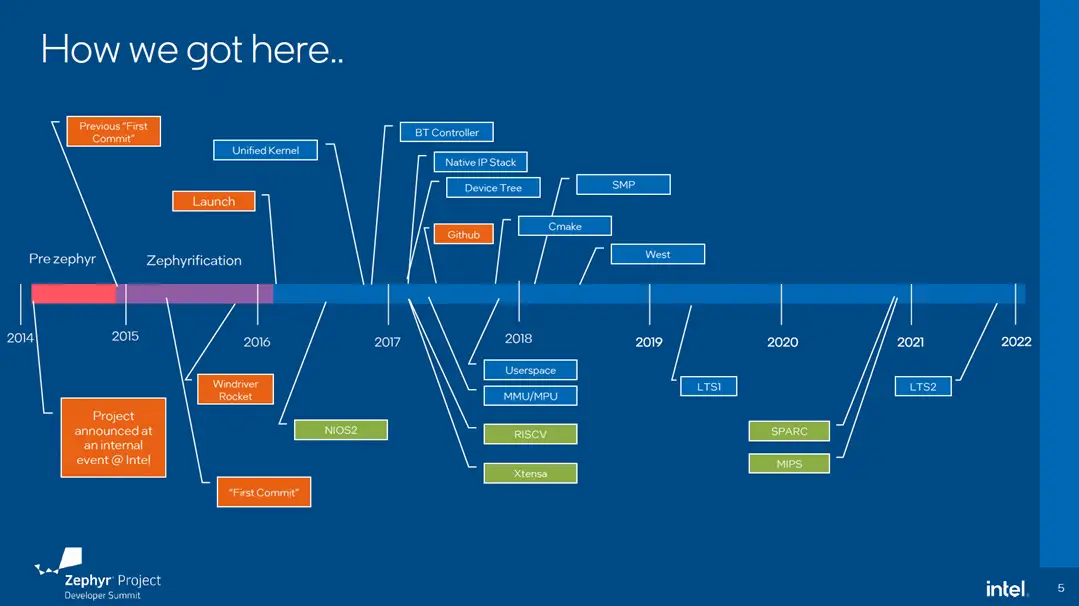
Zephyr RTOS is a lightweight, open-source operating system developed under the Linux Foundation. It was born out of the merger of Wind River’s Rocket OS and Intel’s TinyTILE OS in 2016. Since then, it has grown into a vibrant community project supported by major players like NXP, Nordic Semiconductor, Synopsys, and more.
Unlike traditional RTOS solutions that are often proprietary and platform-specific, Zephyr is built with openness, portability, and modularity at its core. It supports a wide range of architectures, including ARM, x86, RISC-V, MIPS, and even some niche ones like ARC and Nios II. This makes it incredibly versatile for various embedded applications.
Key Features of Zephyr RTOS
1. Modular and Configurable Architecture
Zephyr is built using a highly modular design , allowing developers to include only the components they need. This minimizes memory footprint and maximizes performance on resource-constrained devices. You can choose which drivers, protocols, and libraries to compile, making it suitable for both small microcontrollers and more complex SoCs.
2. Real-Time Capabilities
As a true RTOS, Zephyr provides deterministic behavior with support for:
- Preemptive and cooperative scheduling
- Thread priorities (up to 32 levels)
- Low-latency interrupt handling
- Fine-grained timing control
These features ensure that time-sensitive operations are handled efficiently—a must-have for systems where delays can lead to critical failures.
3. Security First Approach
Security is baked into Zephyr from the ground up:
- Support for secure boot via MCUboot
- Memory protection through hardware-assisted MPU/ARM TrustZone
- Cryptographic libraries compliant with standards like TLS 1.2/1.3
- Regular security updates from the community
This makes Zephyr a solid foundation for IoT devices that need to withstand evolving cyber threats.
4. Rich Connectivity Stack
Zephyr comes with a full suite of networking capabilities:
- Bluetooth (BLE and Mesh)
- Wi-Fi (station and softAP modes)
- Ethernet
- IEEE 802.15.4 (used in Thread and Zigbee)
- CoAP, MQTT, and HTTP clients
This rich stack allows developers to build connected devices without needing external middleware or stacks.
5. Multi-Architecture Support
Zephyr supports a broad array of processor architectures:
- ARM: Cortex-M, Cortex-A, TrustZone-M
- x86: IA-32, x86_64
- RISC-V: 32-bit and 64-bit variants
- MIPS
- ARC
- Nios II
This flexibility ensures that your codebase can be reused across different platforms, reducing development time and effort.
6. Open Source and Community-Driven
Zephyr is hosted under the Linux Foundation, which guarantees transparency, neutrality, and long-term sustainability. With active contributions from industry leaders and hobbyists alike, Zephyr benefits from continuous improvements, bug fixes, and feature enhancements.
Architecture Overview
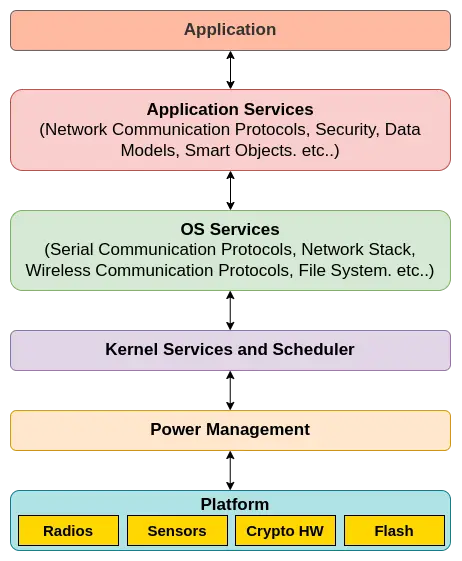
At a high level, Zephyr's architecture is divided into several layers:
1. Kernel
The Zephyr kernel is a preemptive, priority-based scheduler designed for real-time embedded systems. It supports multithreading, interrupt handling, inter-thread synchronization (semaphores, mutexes, etc.), and optional memory protection. Built on a unified configuration model, it allows fine-grained control over system capabilities, enabling minimal or feature-rich deployments. The kernel runs in privileged mode, serving as the execution backbone for Zephyr RTOS applications across diverse architectures.
2. Device Drivers
Zephyr includes a comprehensive set of device drivers for peripherals such as GPIOs, UARTs, SPI, I2C, ADCs, and more. These drivers abstract hardware differences, enabling portable application code.
3. Networking Stack
The Zephyr networking stack is a modular, lightweight IPv4/IPv6 stack optimized for constrained embedded devices. It supports UDP, TCP, 6LoWPAN, CoAP, MQTT, TLS (via mbedTLS), and L2 technologies like Ethernet, Wi-Fi, Bluetooth Low Energy (BLE) and IEEE 802.15.4. With a socket-based API and offloaded or native drivers, the stack integrates tightly with Zephyr’s event-driven kernel, offering deterministic performance and fine-grained control over network resources.
4. File Systems
Zephyr supports lightweight file systems designed for embedded storage, including LittleFS, FATFS, and NVS (Non-Volatile Storage). LittleFS offers wear leveling and power-loss resilience, ideal for flash memory. FATFS provides compatibility with SD cards and USB mass storage. NVS is a key-value store optimized for configuration data. The file system API abstracts storage backends, enabling flexible integration across block or flash-based devices.
5. Build System
Zephyr uses CMake as its primary build system, providing a flexible and scalable way to manage dependencies and configurations. The `west` tool helps manage repositories and flashing devices.
Use Cases and Industry Adoption
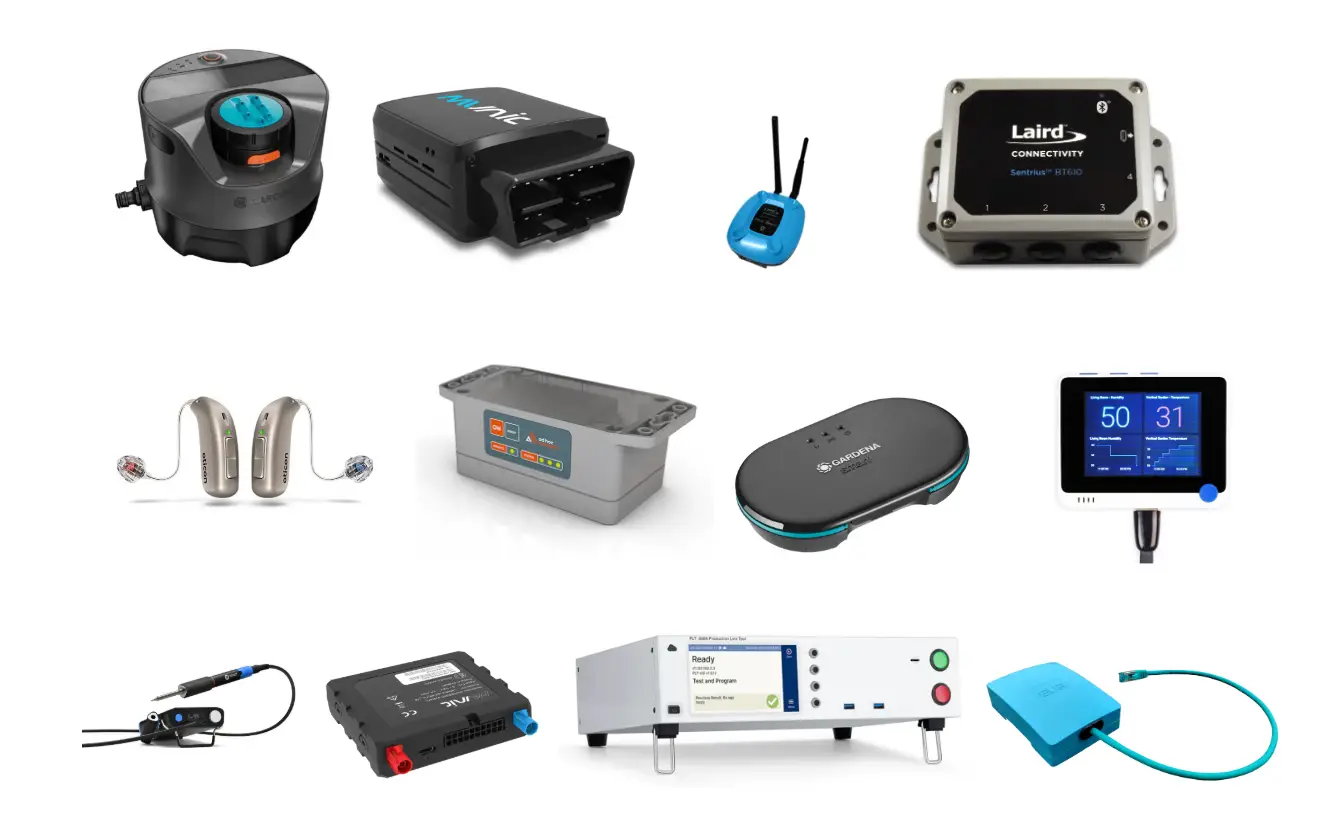
Zephyr RTOS is particularly well-suited for resource-constrained embedded systems that require real-time processing and connectivity. Here are some common use cases:
1. IoT Devices
From smart home gadgets to agricultural sensors, Zephyr powers many edge devices due to its:
- Small footprint (can run on devices with as little as 8 KB RAM)
- Built-in wireless protocols
- Security features
2. Wearables
With support for ultra-low-power modes and integration with sensors, Zephyr is ideal for health trackers, smart watches, and fitness bands.
3. Industrial Automation
Zephyr’s real-time capabilities make it suitable for industrial control systems, robotics, and factory automation equipment.
4. Edge AI
With TensorFlow Lite Micro support, Zephyr is increasingly being used to run machine learning models on the edge, bringing AI capabilities to microcontroller-level devices.
Why Choose Zephyr Over Other RTOS Options?
There are many RTOS options available, including FreeRTOS, ThreadX, NuttX, and others. So why choose Zephyr?
Openness and Vendor Neutrality
Zephyr avoids vendor lock-in thanks to its open governance model. Unlike proprietary RTOSes, there are no licensing fees or restrictions.
Strong Security Focus
While many RTOSes add security as an afterthought, Zephyr builds it in from day one. From secure boot to runtime encryption, Zephyr treats security as a first-class citizen.
Active Development and Community Support
With regular releases and a growing ecosystem, Zephyr benefits from rapid innovation and broad community input.
Comprehensive Documentation
Zephyr offers excellent documentation, sample projects, and developer tools, making it easier for newcomers to get started.
Having said all the points above
Conclusion
Zephyr RTOS represents a powerful, forward-looking approach to embedded software development. Its combination of real-time capabilities, security focus, open-source roots, and cross-platform flexibility make it an attractive option for a wide range of applications—from simple sensors to complex IoT gateways.
As the demand for intelligent, connected, and secure embedded systems continues to grow, Zephyr stands out as a scalable and future-proof solution. Whether you're a hobbyist tinkering with a microcontroller or a professional engineer building enterprise-grade devices, Zephyr RTOS is definitely worth exploring.
Considering all the features offered in the Zephyr OS, it can be clearly concluded that using Zephyr OS as a goto OS in the product development and it reduces the development time, guarantees the quality of the product performance, security and other crucial aspects.
So if you haven’t already, consider giving Zephyr a try—it might just become your favorite RTOS.
Have a business idea and want to convert it into a Zephyr OS based product ? Want to know more about Aerlync’s expertise in Zephyr RTOS? Contact Us!



Build with the Most Trusted Engineering Partner

Delivers cutting-edge embedded solutions, from firmware development to wireless protocols, ensuring reliability and innovation.

Resources
Copyright © 2026
Privacy Policy
Terms of Service
Delivers cutting-edge embedded solutions, from firmware development to wireless protocols, ensuring reliability and innovation.


Resources
Privacy Policy
Terms of Service
Copyright © 2026