
16 Jun 2026

5 min read
The Connected Device Revolution: Why Engineering Complexity Is Increasing Faster Than Ever
-Aerlync Team
16 Jun 2026
5 min read
The Connected Device Revolution: Why Engineering Complexity Is Increasing Faster Than Ever
-Aerlync Team
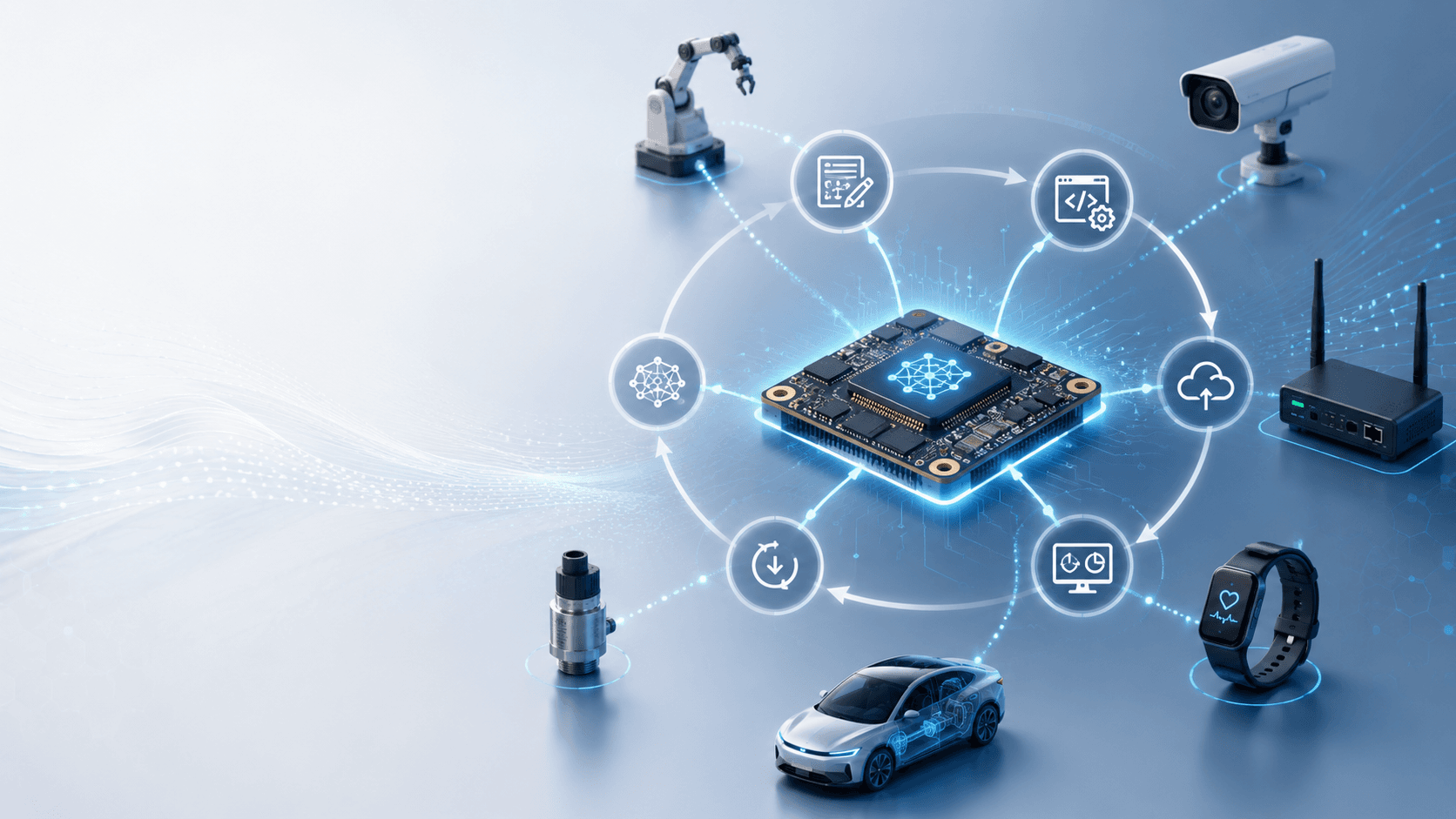
We Are No Longer Building Products. We Are Building Ecosystems.
A decade ago, product engineering was relatively straightforward, more of a simple device driver, a simple function of purpose build Firmware with a relatively simple task of functionality, with not much consideration.
A device was designed to perform a specific function. Hardware teams built the electronics. Firmware teams wrote the code. Testing teams validated stability and performance. Once shipped, the product’s lifecycle was largely complete with little concern for interoperability, security, or lifecycle management. As the computational capability grew and connectivity became a design requirement, engineering development and product planning shifted from isolated drivers to reusable platform layers that could abstract hardware differences and support multiple product lines.
The emergence of the Internet of Things and Edge AI has dramatically accelerated this shift, connecting billions of devices to cloud infrastructure and exposing the fundamental inadequacy of traditional firmware approaches in networked environments.
Modern hyper-connected products are expected to be intelligent, connected, secure, continuously updated, cloud-integrated, and increasingly autonomous. Whether it is a smart medical device, an industrial sensor network, a connected vehicle, or a consumer wearable, customers no longer evaluate products solely on features. They evaluate experiences and the intelligence they can provide.
This shift has triggered what can only be described as the Connected Device Revolution.
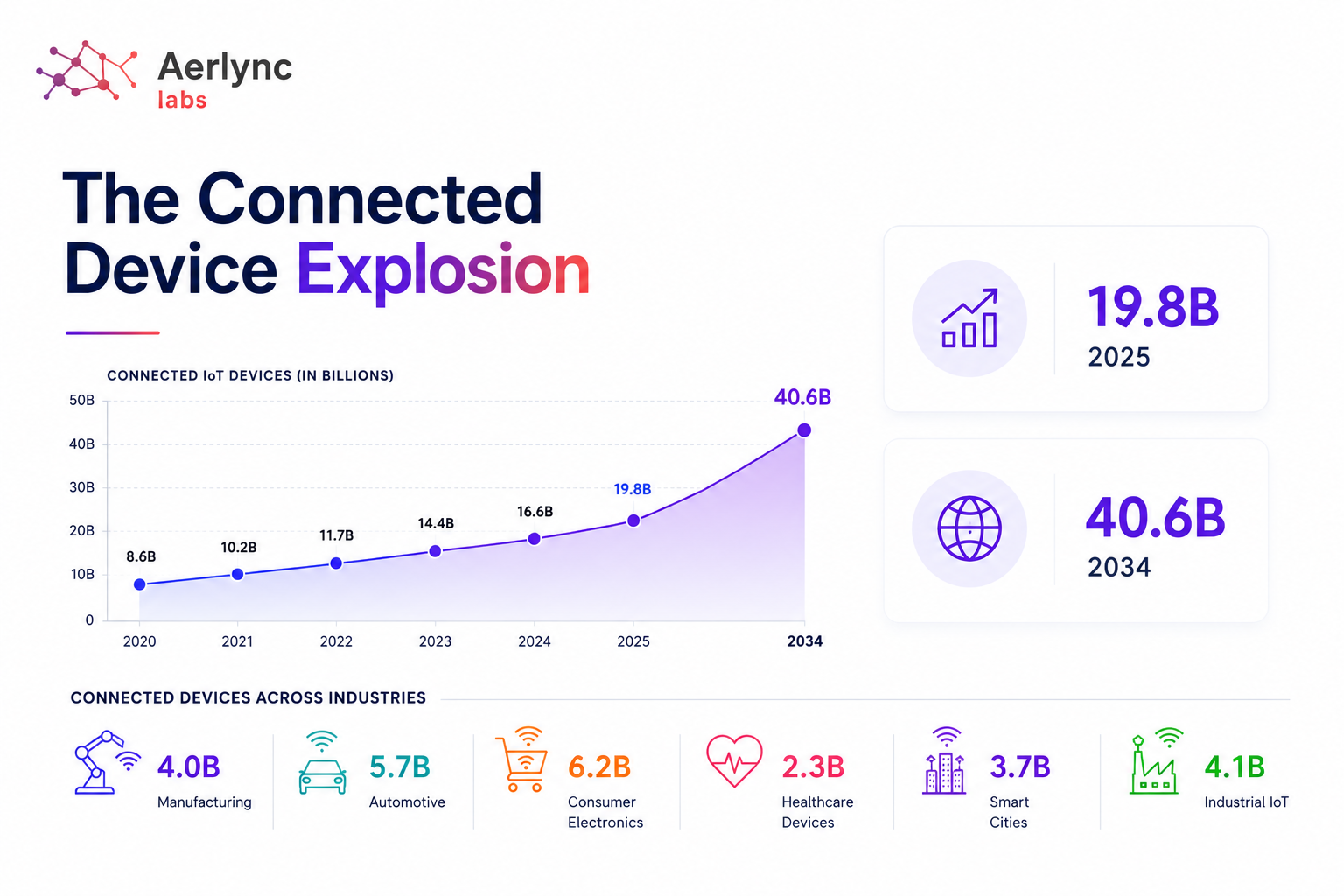
The scale of this transformation is staggering. Industry forecasts suggest the number of connected IoT devices worldwide will grow from nearly 20 billion in 2025 to more than 40 billion by 2034. At the same time, the global IoT market is projected to surpass $900 billion by 2034. The world is becoming increasingly instrumented, interconnected, and data-driven.
Key Industry Indicators
| Metric | 2025 | Future Outlook |
|---|---|---|
| Global IoT Devices | ~19.8 Billion | 40. 6 Billion by 2034. |
| Cellular IoT Connections | 4.5 Billion | Strong growth through 2031 |
| Global IoT Market Value | $419.8 Billion | $908 Billion+ by 2034 |
| Mobile Economy Contribution | $7.6 Trillion | $11. 3 Trillion by 2030. |
| Edge AI Market | ~$25 Billion | $118 Billion+ by 2033 |
Sources: Statista, Ericsson, GSMA, Grand View Research.
Why Engineering Complexity Is Growing Faster Than Innovation?
While the opportunities are immense, a less-discussed reality is the complexity of product development. Organizations that learn to manage this complexity will define the next generation of technological leadership. Most discussions around connected devices focus on capabilities, and few focus on what it takes to engineer them.
The reality is that complexity is being introduced simultaneously across multiple technology layers. The pace of innovation in connected embedded systems has never been faster, yet engineering teams find themselves spending more time managing complexity than delivering differentiated features.
The root cause is architectural debt accumulated over decades. As devices evolved from standalone endpoints to networked, cloud-connected platforms, each new capability — connectivity, security, remote management, compliance — layered on those software foundations never designed to carry that weight. Among these are some of the heavy hitters when it comes to managing development and productization complexity.
Embedded OS Fragmentation:Supporting a diverse ecosystem of operating systems—including FreeRTOS, Zephyr, Yocto, and AOSP—adds significant architectural and maintenance overhead.
Regulatory & Compliance Mandates: Meeting rigorous security, reliability, and resilience standards for regulated sectors like automotive, medical, and mission-critical infrastructure creates substantial documentation and verification burdens.
Embedded SDLC:Moving beyond localized deployment, managing the full software lifecycle—including remote device management and secure recovery processes—is now table stakes for any connected product.
SBOM Management:Implementing a Software Bill of Materials (SBOM) is now essential for maintaining traceability, managing Edge device fleets, performing vulnerability assessments, and protecting intellectual property.
Hardware, mainly chipset diversity, compounds the problem, as teams must support an ever-expanding matrix of processors, communication protocols, and peripheral combinations, each demanding its own integration and validation effort.
As listed above, open-source adoption, while essential for long-term sustainability, introduces its own overhead: tracking upstream changes, managing CVEs, maintaining license compliance, and contributing patches back all consume engineering bandwidth that could otherwise go toward product innovation.
Regulatory frameworks from the EU, the US, as well as other regional compliance restrictions and SBOM mandates now require systematic security assessments and software provenance tracking that most embedded teams were never structured to handle. Further, adding to the shortage of skilled engineering talent is having the engineering teams face never-ending tech debt and continue to play catch-up rather than accelerate innovation.
Breaking down the Complexity layers in detail
We see that the complexity of intelligent edge devices is multi-layered with added interdependence and the challenge of aligning development velocity for each of them.
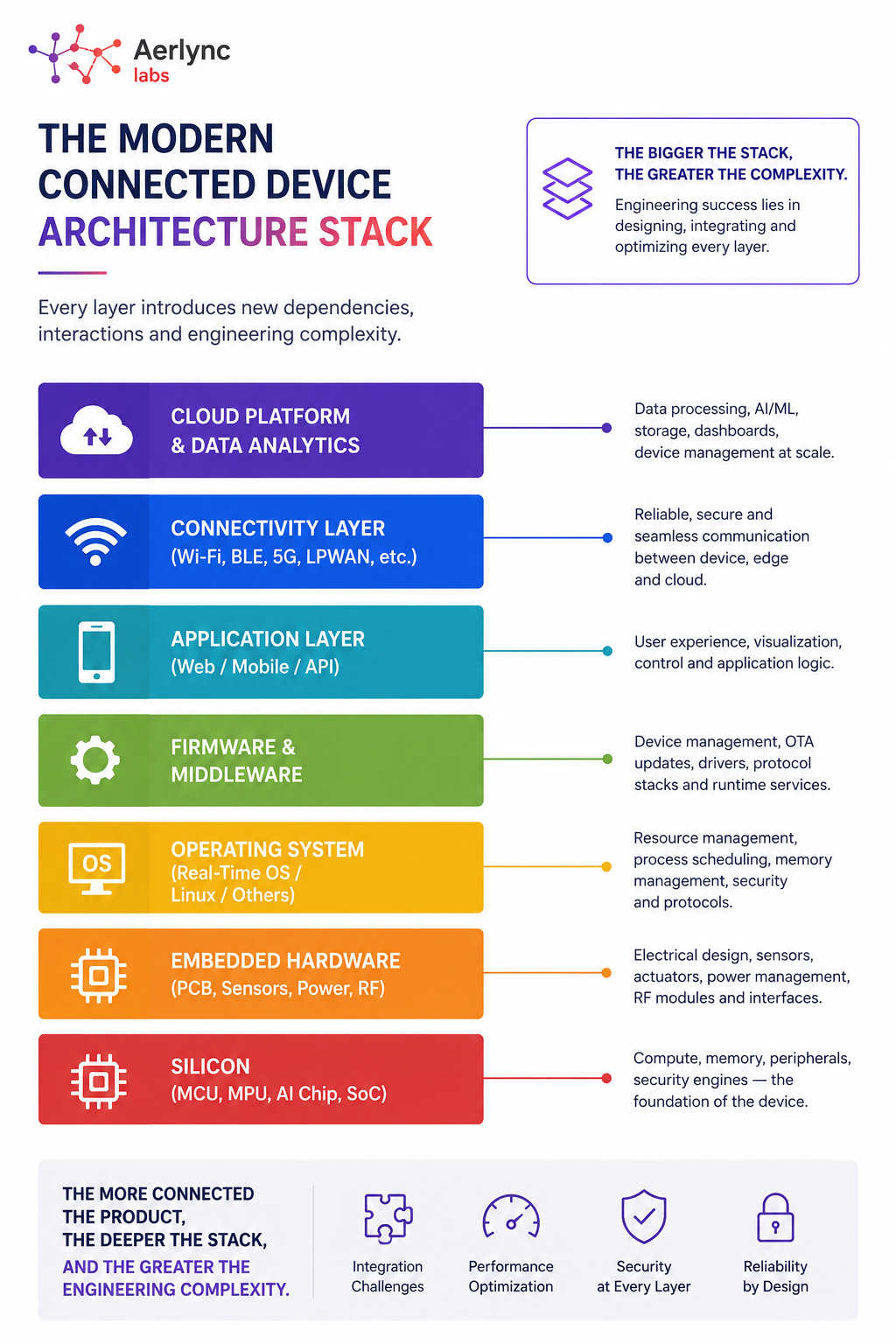
Silicon SoC is becoming increasingly versatile and needs a platform approach
A modern industrial controller may incorporate dozens of interconnected hardware subsystems that must operate reliably under real-world conditions. The challenge is no longer hardware design but rather system architecture.
Engineering teams must now think beyond individual components and design entire connected ecosystems from the silicon layer upward. The teams that navigate this successfully are not those with the most hardware expertise, but those with the architectural discipline to design connected systems holistically, taking a platform approach while integrating silicon abstraction to software lifecycle management.
Software Is Becoming the Product
Historically, software supported hardware. Today, software defines the customer experience. This transformation is evident with the paradigm shift in many verticals where software plays a pivotal role (FOTA updates, On-device video analytics, predictive maintenance for IIoT, real-time diagnostics, and several others) in customer experience and user preferences.
Increasingly, the product’s viability (and value) is now determined by the usability of each of its key components (Firmware, Cloud integration, Apps, data models, security). As a result, product engineering is evolving into software lifecycle engineering.
The challenge for engineering leaders is that every software update now has implications for security, interoperability, testing, and compliance. Due to this, the complexity compounds with every software release.
So what is the solution?
Well, the path forward requires engineering leaders to make quintessential architectural investments in the area of making software modular, automating compliance, security checks into the CI/CD process, and most importantly, platform consolidation to build levers for faster development.
Connectivity Has Become Mission-Critical Infrastructure
A connected product is no longer connected to a single platform. It is connected to an ecosystem interacting with Cloud, Mobile App, M/AI engines, value-added services, and other peripheral connected devices, while expected to deliver reliable and resilient connections.
Oftentimes, these firmware are generalized and need to be customized for specific mission-critical applications for power, performance, reliability, and latency. The truth be told, not all Wi-Fi and BT are built the same, and managing vendor-specific FW stack is not practical and not scalable. Much of the work is being done by industry consortia to unify with the abstraction and certification process (e.g. WFA, Prpl project, CSA, BT SIG).
Yet standardization alone does not close the gap between a certified specification and a production-ready field deployment. Engineering teams must bridge that gap with hardware abstraction layers that decouple application logic from vendor-specific firmware and firmware configuration profiles that treat connectivity tuning with the same rigor as application code.
We believe the answer to multi-platform complexity is a unified device management and observability layer that is a single control plane that spans cloud, mobile, and edge interactions, monitors connectivity health in real time, and can trigger firmware updates or configuration changes in response to field conditions.
Frameworks like Matter and the Prpl Foundation's open-source reference stack represent the industry's most credible path toward making this viable, but ultimate success depends on engineering organizations' ability and adequately staffing their implementation and openness to contributing back to these foundations.
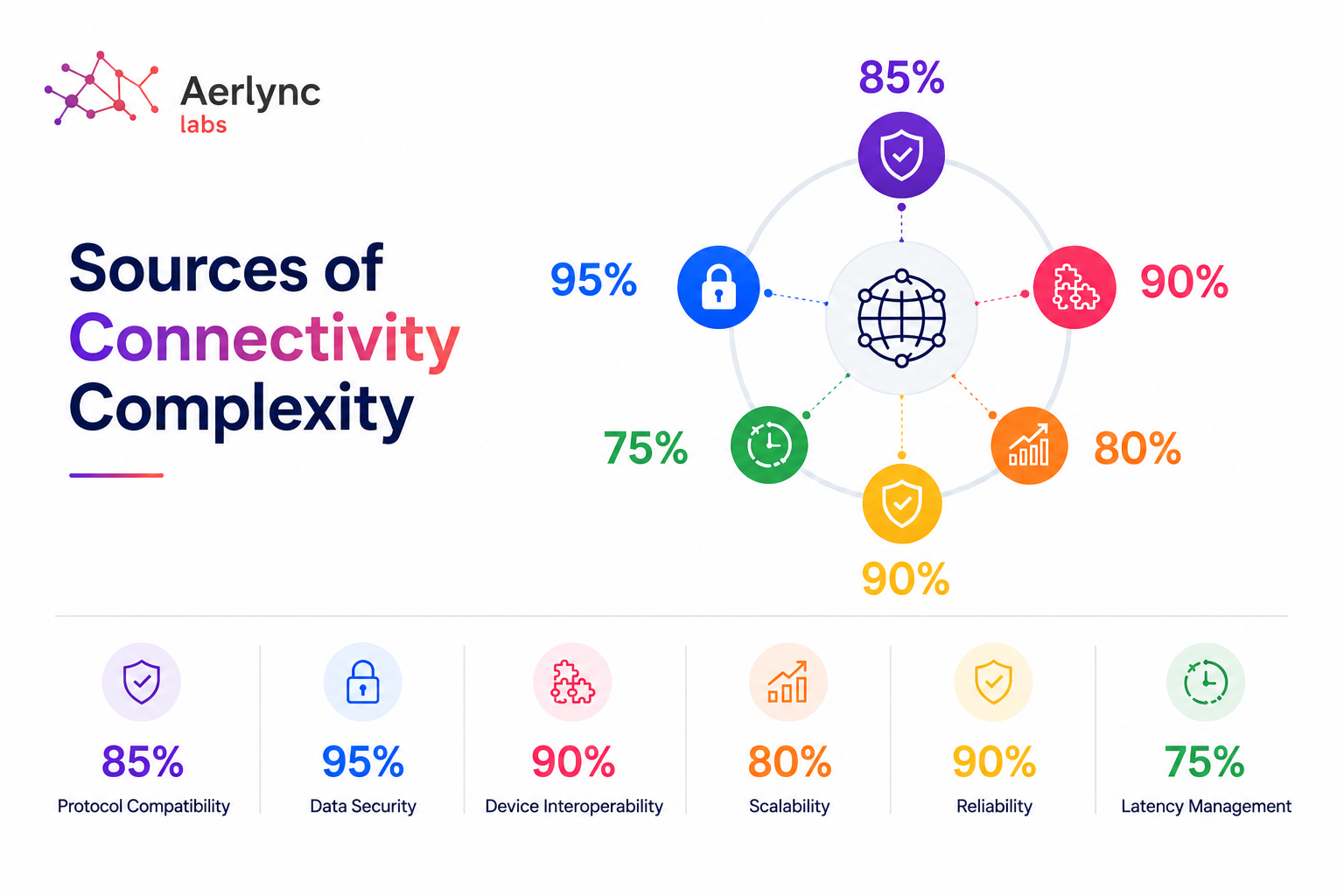
Security is non-negotiable and not optional
Most engineering teams know security matters. The harder truth is that knowing it and building for it are two very different things, and in embedded systems, the gap between those two is where breaches happen.
As ecosystems expand from industrial controllers to smart home appliances, cybersecurity becomes a core engineering discipline rather than a compliance exercise. The technical surface area is broad. Secure Boot and firmware integrity ensure only verified code executes at the silicon level. Unique cryptographic device identities replace shared credentials that are vulnerable to fleet-wide compromise. Encryption protects data in transit and at rest, even on memory-constrained microcontrollers. Zero Trust architectures eliminate implicit network trust by requiring continuous verification at every layer. What makes this genuinely difficult is that none of these controls exists in isolation. A weakness in any one of them undermines the entire stack, and attempting to retrofit security after hardware tape-out is costly, rarely complete, and sometimes simply not possible.
For embedded engineering organizations, the answer is to treat security as a foundational constraint rather than a project phase. Penetration testing before general availability, paired with a structured vulnerability disclosure and patching process after launch, keeps the product defensible across its full field lifetime. Most connected product teams have some security practices in place. Far fewer have a clear, current understanding of their actual exposure. A security posture assessment closes that gap — systematically evaluating firmware integrity controls, authentication mechanisms, update pipelines, and network attack surfaces against known threat models and current CVE disclosures. The output is not a checklist. It is a prioritized, honest picture of where risk lives and what needs to be addressed before a product reaches scale.
Aerlync Labs provides dedicated security services for embedded engineering organizations looking to build that clarity into their development process, from early architecture review through post-launch vulnerability management.
The Rise of Edge AI Is Redefining Product Intelligence
Perhaps the most significant shift underway is the migration of intelligence from the cloud to the edge. Instead of sending every piece of data to centralized systems, devices are increasingly making decisions locally, in real time, without network dependency, and often in environments where latency or connectivity constraints make cloud reliance impractical. Smart surveillance cameras, predictive maintenance systems, autonomous robots, industrial automation platforms, and connected medical devices are among the most critical examples of this shift.
According to reports from Grand View Research and Fortune Business Insights, the global Edge AI market was valued at nearly $25 billion in 2025 and is projected to exceed $118 billion by 2033, growing at more than 21% annually.
Other industry forecasts suggest the market could exceed $385 billion by 2034 as adoption accelerates across industries.
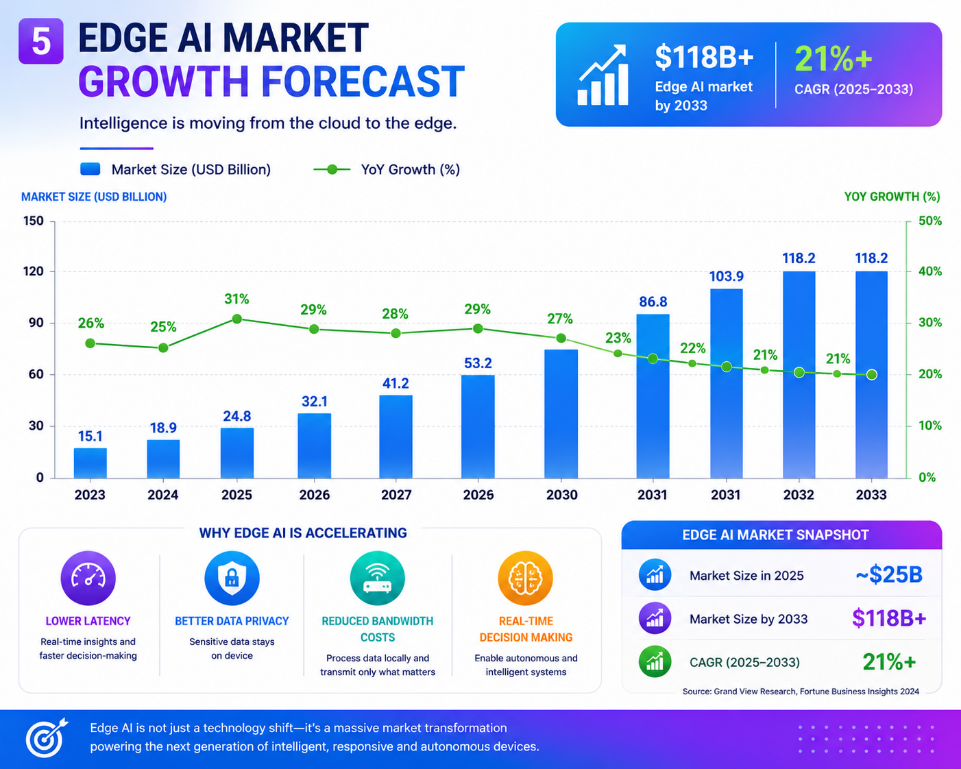
What makes Edge AI fundamentally different from traditional embedded development is that the work does not end at product launch. A deployed ML model is not a static artifact. It drifts as real-world data diverges from training assumptions, degrades as operating conditions evolve, and must be continuously evaluated for accuracy and behavioral integrity. This demands a dedicated product lifecycle for AI, one that runs alongside the hardware and firmware lifecycle but follows its own rhythm of training, optimization, benchmarking, and controlled rollout.
Engineering organizations building Edge AI products need to design for this reality from the start. That means establishing pipelines that can push model updates independently of firmware releases, instrumentation that monitors inference quality and flags drift in production, and governance processes that determine when a model needs to be retrained versus replaced entirely. Most importantly, it means building the organizational readiness to adopt newer and more capable AI models quickly as the field advances. The teams that will lead in connected intelligence are not simply those that deploy AI today.
They are the ones building the systems, processes, and culture to iterate on it continuously, safely, and at speed.
The Hidden Challenge Nobody Talks About: Systems Complexity
As technology complexity increases, a larger challenge often goes unnoticed — Organizational Complexity. Traditionally, engineering teams such as hardware engineering, firmware development, embedded software, connectivity, cloud, and validation operated independently, each optimizing within their own domain. These silos are now coming down with a need to have a unified platform story.
We have already seen firmware updates impacting cloud integration, or a security enhancement may compromise performance, and an upgrade in connectivity may demand hardware modifications. Every design decision now affects multiple engineering domains simultaneously, and the cost of poor coordination compounds with every release cycle. The biggest challenge is no longer technological complexity.
The biggest challenge is system complexity — and most engineering organizations are still structured for a world that no longer exists. Addressing this requires more than better tools or larger teams. It requires a well-governed Software Development Lifecycle that is designed for cross-domain complexity from the ground up.
At Aerlync, we work with engineering leaders to build clear, comprehensive solution plans that map every software component, including firmware, connectivity, cloud integration, security, and application layer to its dependencies, update cadence, and cross-domain impact before a single line of code is written. A structured SDLC gives hardware, firmware, connectivity, cloud, and validation engineers the shared architectural context to move fast without breaking each other's work, turning organizational complexity from a hidden liability into a managed, predictable engineering discipline.
The Emerging Engineering Model: Silicon-to-Cloud Engineering
While historical engineering cycles managed hardware, firmware, and cloud domains as isolated vertical silos, the modern era of intelligent endpoints necessitates a paradigm shift. Success is now found in Silicon-to-Cloud Engineering, a unified framework that weaves semiconductor platforms, connectivity stacks, and secure cloud infrastructure into a singular, cohesive ecosystem.
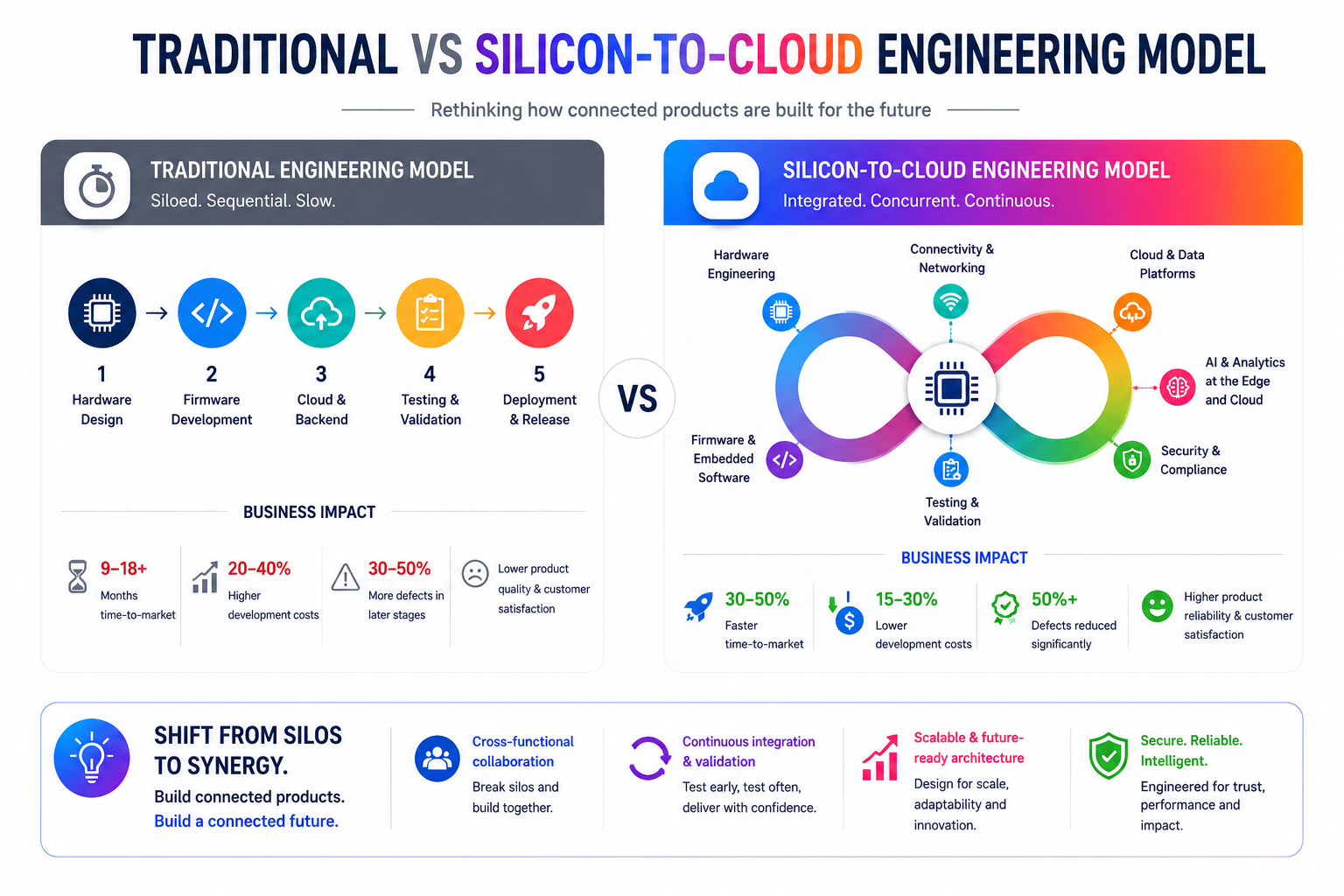
By moving beyond disconnected drivers to integrated platform layers, organizations can drive accelerated innovation, ensure continuous lifecycle evolution, and deliver the seamless experiences customers now demand. In this new landscape, the objective is no longer merely shipping a device; it is building scalable, intelligent ecosystems that span the entire technology stack.
The objective is no longer simply building products. The objective is building scalable, intelligent ecosystems.
Aerlync Perspective: Complexity Is Becoming a Competitive Advantage
For years, engineering leaders viewed complexity as something to minimize. Today, that mindset is changing. The companies creating the most successful connected products are not necessarily reducing complexity. They are learning how to manage it. Engineering complexity is increasingly becoming a source of competitive differentiation. Organizations that can effectively integrate hardware design, embedded systems, connectivity solutions, cloud platforms, security frameworks, testing methodologies, and Edge AI capabilities will innovate faster than those operating in silos.
At Aerlync Labs, we have built our entire practice around this belief. From full-stack embedded engineering spanning BSP development, RTOS driver design, hardware abstraction, wireless protocol development across Wi-Fi, Bluetooth, Zigbee, Thread, UWB, and IoT stacks, to cloud native digital engineering that bridges embedded devices with intelligent applications, we bring the cross-domain depth that connected product teams need but rarely find in a single partner. Our Edge AI and ML lifecycle practice extends that further, helping engineering teams integrate, benchmark, tune, and sustain AI models running directly in firmware on real devices where power, performance, and latency constraints are non-negotiable. On the validation side, our testing services span functional, performance, stress, protocol, compliance, and CI/CD automation testing, backed by dedicated RF, hardware, and testing labs, giving engineering leaders the confidence to ship faster without compromising reliability or field readiness.
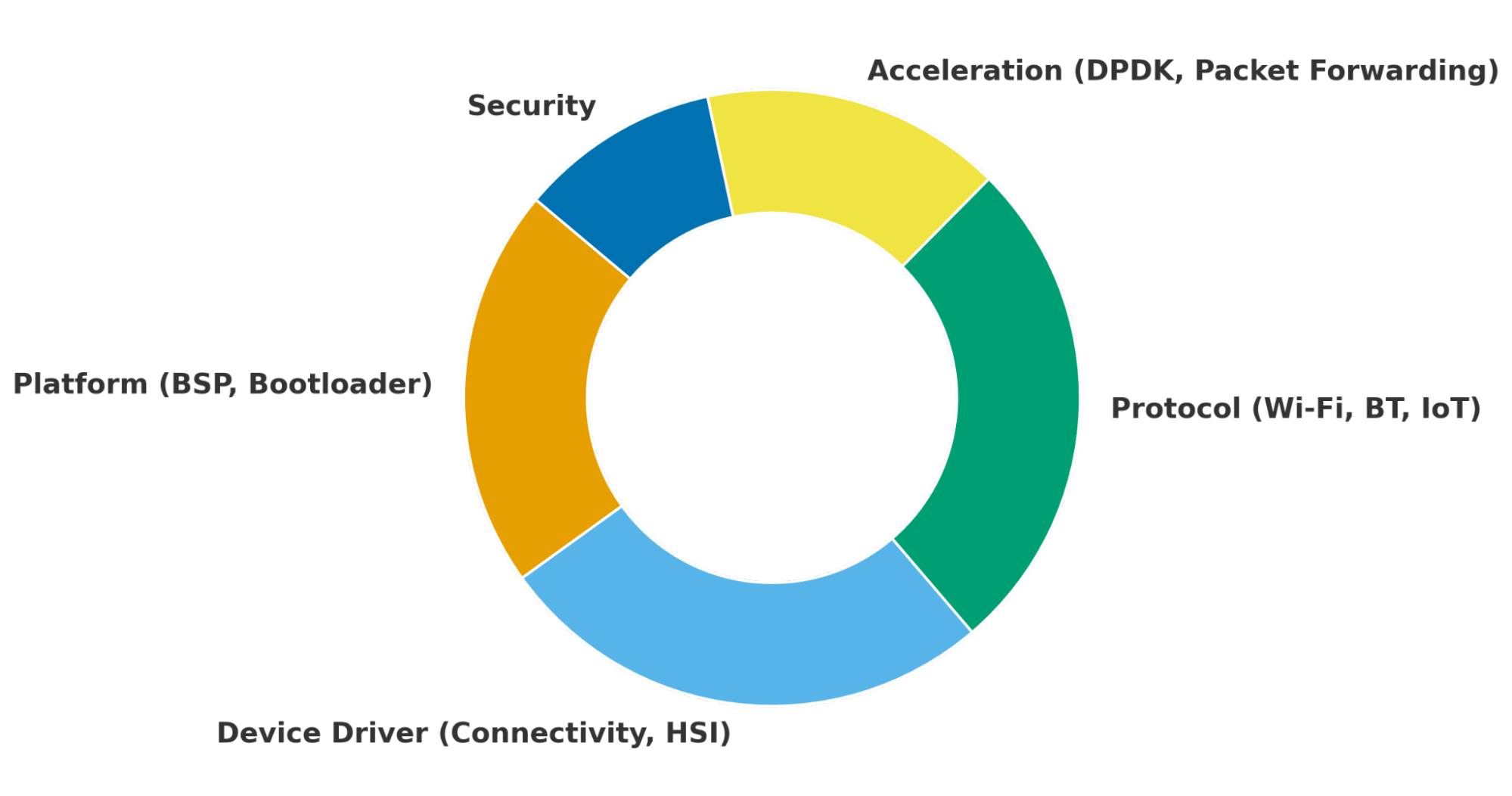
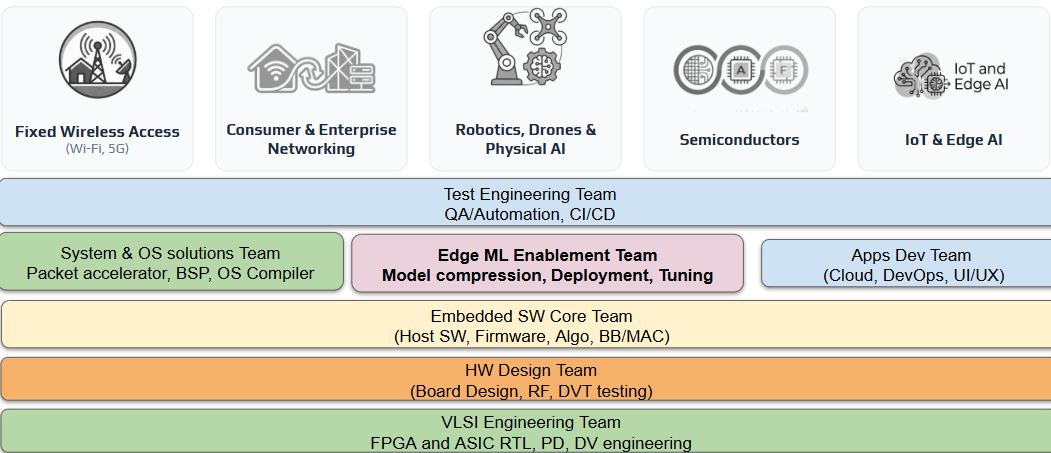
What ties all of this together is a platform-first, lifecycle-oriented engineering approach that treats every software component from bootloader to cloud connectivity as part of a single, governed system. The future belongs to engineering organizations capable of orchestrating entire ecosystems rather than isolated products, and Aerlync Labs exists to be the engineering partner that makes that possible.
Final Thought: The Next Decade Will Be Defined by Connected Intelligence
The connected device revolution is entering a new phase. The question is no longer whether products will become connected.
That transformation has already happened. The question is whether organizations are prepared for the engineering complexity that accompanies connected intelligence.
As billions of devices become part of larger digital ecosystems, engineering excellence will increasingly depend on a company’s ability to bridge the gap between silicon, software, connectivity, cloud, security, and AI. The future will not be built by the organizations with the most connected devices. It will be built by those who master the complexity behind it.
Recommended Blogs
11 March 2026
5 min read
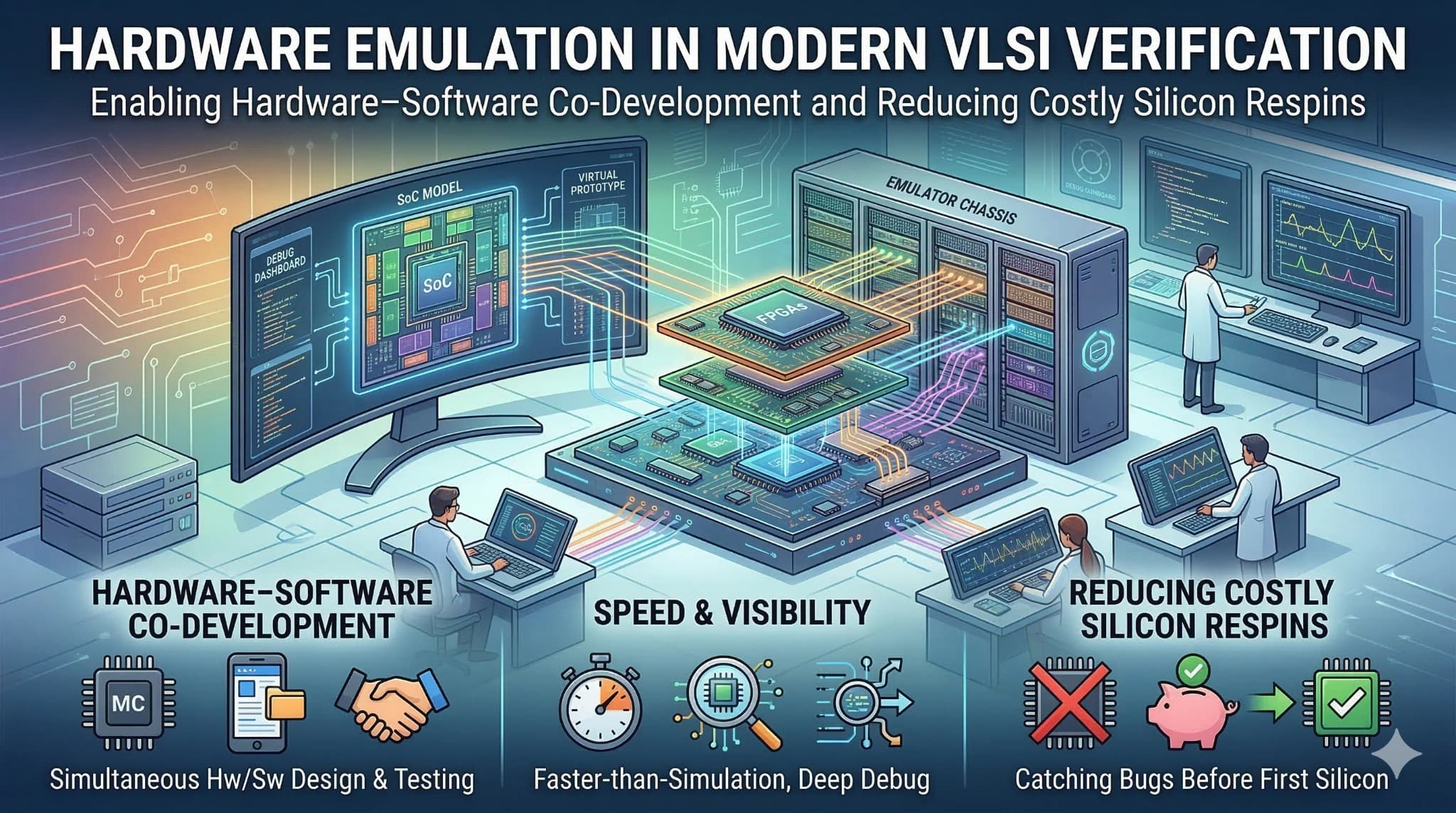
Hardware Emulation in Modern VLSI Verification: Enabling Hardware–Software Co-Development and Reducing Costly Silicon Respins

15 Oct 2025
5 min read
Edge AI: Intelligence at the Frontier of Computing

17 Jun 2026
5 min read
Beyond Cables: The Next Era of Industrial Wireless Connectivity
Build with the Most Trusted Engineering Partner

Delivers cutting-edge embedded solutions, from firmware development to wireless protocols, ensuring reliability and innovation.

Resources
Copyright © 2026
Privacy Policy
Terms of Service
Delivers cutting-edge embedded solutions, from firmware development to wireless protocols, ensuring reliability and innovation.


Resources
Privacy Policy
Terms of Service
Copyright © 2026